Showing posts with label Mercedes-Benz. Show all posts
Showing posts with label Mercedes-Benz. Show all posts
Thursday, 15 October 2009
 2011 Mercedes-Benz SLS AMG
 2011 Mercedes-Benz SLS AMG
 2011 Mercedes-Benz SLS AMG
 2011 Mercedes-Benz SLS AMG
 2011 Mercedes-Benz SLS AMG
Sunday, 17 May 2009
2009 Mercedes-Benz SL63 AMG Wallpaper
 2009 Mercedes-Benz SL63 AMG
  2009 Mercedes-Benz SL63 AMG Wallpaper
 2009 Mercedes-Benz SL63 AMG Interior
 2009 Mercedes-Benz SL63 AMG Picture
 2009 Mercedes-Benz SL63 AMG Photo
Wednesday, 29 October 2008


Tuesday, 28 October 2008


Thursday, 23 October 2008
Mercedes-Benz ML 63 AMG 2009
 The Mercedes-Benz ML 63 AMG now demonstrates even more emphatically its exceptional status as the performance SUV with the largest displacement and highest output. The new AMG front apron is an eye-catching feature with its high-gloss, chromed underguard. The lower cooling air inlet appears even larger thanks to the central black grille. New-look headlamps flank the equally new AMG-specific radiator grille: painted in high-gloss black, its three radiator louvres feature chrome highlights. Round fog lamps set well to the outside with chrome surrounds and the flared wheel arches in the body colour make the flagship M‑Class appear even wider and more muscular.
Even more unmistakable, even more powerful: this philosophy is also continued at the rear. The high-gloss, chromed underguard is the undoubted highlight on the equally new AMG rear apron with integrated reflectors. Further visual highlights include the two chromed twin tailpipes on the AMG sports exhaust system. The dark-tinted tail lights are replaced with LED tail lights with their clear-glass look if the optional bi-xenon headlamps are specified. New-look exterior mirrors as well as the standard-fit aluminium-look roof rails add the finishing touches to the styling modifications.
Viewed from the side, the new 20-inch 5-spoke AMG light-alloy wheels make a bold statement. Painted titanium grey with a high-sheen finish, the 10-inch tyres are shod with 295/40 R 20 tyres front and rear. An even more impressive wheel/tyre combination is available as an option: titanium-grey-painted, high-sheen 21-inch AMG light-alloy wheels with the new twin-spoke styling are shod with 295/35 R 21 tyres.
The new AMG ergonomic steering wheel stands out in the practical, high-quality interior of ML 63 AMG: perforated leather adorns the specially shaped grip area, while the bottom two spokes are finished with a silver-coloured insert. New AMG aluminium shift paddles allow the driver to shift gear manually. A nappa leather-trimmed dashboard is also available as an option.
The new telematics generation also features in the M-Class. The Audio 20 fitted as standard in the Mercedes-Benz ML 63 AMG combines ease of use and logical menu structure with consummate entertainment. A hands-free system with Bluetooth technology comes as standard and a new Media Interface in the glove compartment is available as an option, which enables mobile audio devices such as the iPod to be fully integrated and then controlled via the audio system's user interface. Mercedes-Benz also offers the optional enhanced LINGUATRONIC voice-operated control system with its hallmark outstanding functionality in conjunction with the new telematics generation.
AMG 6.3-litre V8 engine and permanent, asymmetrical all-wheel drive
With a maximum output of 375 kW/510 hp at 6800 rpm the Mercedes-Benz ML 63 AMG remains the most powerful off-roader on the market two-and-a-half years after its launch. The AMG 6.3-litre V8 engine develops maximum torque of 630 Nm at 5200 rpm from a displacement of 6208 cc. In essence, this superior engine delivers top-notch performance. The ML 63 AMG accelerates from 0-100 km/h in 5.0 seconds, top speed is 250 km/h (electronically limited). Power transfer is via the AMG SPEEDSHIFT 7G-TRONIC automatic transmission with three drive modes.
The permanent all-wheel drive is decidedly sporty: the power is split asymmetrically 40:60 between the front and rear wheels to provide optimum agility. The AMG sports suspension based on AIRMATIC guarantees dynamic performance combined with the hallmark Mercedes long-distance comfort. The air suspension features AMG-specific damper struts and the specially configured adaptive damping system ADS including automatic level control all-round. Both the dampers and springs instantly respond as the current driving situation changes, but their settings may also be adjusted manually in three stages at the touch of a button. The generously dimensioned AMG high-performance braking system, which features internally ventilated and perforated brake discs all-round, guarantees the shortest possible braking distances and optimum resistance to fading.
AMG sports seats with nappa leather upholstery and Alcantara inserts
The standard specification of the Mercedes-Benz ML 63 AMG includes electrically adjustable AMG sports seats with nappa leather upholstery, Alcantara inserts in the shoulder areas, multicontour function and heating. The AMG instrument cluster comes with a specially designed AMG main menu with gear indicator, recommended upshifts, as well as engine oil temperature and battery voltage display. The integrated RACETIMER enables the driver to record lap times on a racing circuit.
Wednesday, 22 October 2008
Mercedes-Benz S 600 Guard Pullman 2008


Mercedes-Benz engineers are currently developing a new, prestigious luxury limousine with integrated highest protection for governments, businesses, monarchs and heads of state. The armoured Pullman Limousine is based on the long version of the Mercedes-Benz S 600 with a substantially extended wheelbase length. The Mercedes-Benz State Limousine therefore provides a level of roominess worthy of its high-ranking occupants, not to mention outstanding comfort and a fully equipped mobile office. The S 600 Guard Pullman sees the world's oldest car manufacturer continuing its long tradition of building large state carriages with factory-integrated special-protection features.
Tradition and innovation are part of Mercedes-Benz' corporate culture. Nowhere is this more evident than in the construction of large, armoured, prestigious limousines. The Stuttgart-based manufacturer is the only carmaker that develops and builds impressive Pullman limousines with special protection, primarily for the official engagements of heads of state and monarchs. And it has been doing so for some eight decades without interruption.
Originally, Pullman cars were railroad sleeping cars with luxurious appointments, produced by the American Pullman Palace Car Company; however, it was not long before the name "Pullman" also came to describe Mercedes-Benz cars with an extra-long wheelbase and an extremely large passenger compartment in the rear. Separated from the front compartment by a partition, the rear compartment housed four individual face-to-face seats, allowing four passengers to sit opposite each other in truly grand style.
The very first Mercedes-Benz car to be factory-fitted with special protection, in 1928, was a long Pullman version of the W 08/460 Nürburg model. This was followed first by the 770 K, which provided protection befitting the status of the Japanese Emperor Hirohito among others, and then by further Pullman Limousines. Eventually, the legendary Mercedes-Benz 600 assumed the mantle of state carriage, holding it for almost thirty years. As well as being used by the government of the Federal Republic of Germany for official business it was the preferred vehicle of governments from numerous other countries and many prominent dynasties. Further Pullman versions of the Mercedes-Benz S-Guard featuring special protection followed in these illustrious footsteps. Dr Dieter Zetsche, Chairman of the Board of Management of DaimlerChrysler: "The new Mercedes-Benz S 600 Guard Pullman continues an impressive tradition and, as before, will offer the very highest levels of protection, comfort and prestige."
Governments, heads of state and royalty all over the world have always appreciated Mercedes-Benz' vast experience and pioneering technical achievements in the construction of prestigious limousines featuring special protection. The luxury limousine not only provides all the communications and entertainment equipment they need, it also offers them space for discreet meetings. So they have everything perfectly under control, whatever the situation, with the added bonus of highly comfortable, individually styled surroundings.
Newly developed based on the S 600
In terms of technology, the new Pullman Limousine is based on the flagship Mercedes Benz S 600 L Guard model. Power comes courtesy of a smooth twelve-cylinder biturbo engine with a displacement of 5513 cc, an output of 380kW/517 hp and an impressive peak torque of 830 Nm.
Both the chassis and the body are new developments, since simply adding on an extension would not have ensured the required overall stability, given the extra-long wheelbase. These new developments also provide the solid design basis for the installation of the heavy special-protection components. In addition, the new State Limousine features a rear entrance with increased headroom. Behind the partition, there is space for four passengers in the rear compartment with luxurious face-to-face seats in the time-honoured Pullman tradition.
Integrated special protection for highest possible security
The Mercedes-Benz S 600 Guard Pullman also offers its discerning passengers the highest possible degree of protection against terrorist attacks. The Highest Protection specified for this car is equivalent to resistance level B6/B7, as tested and certified by state-approved organisations. Plus it meets further requirements that are not even stipulated by any standard, as tested by public and independent organisations. Its armour resists military-standard small-arms projectiles and provides protection against fragments from hand grenades and other explosive devices. Additional safety features include run-flat tyres, a self-sealing fuel tank and a fire-extinguishing system.
In order to achieve the highest possible degree of protection, specialists with many years of experience in security technology equip the Pullman Limousine in Sindelfingen, working on the principle of integrated special protection. In effect this means that, rather than retrofitting the protective elements in the doors, rear wall, side panels, roof lining and firewall, etc. of an already finished vehicle, they fully integrate them into the bodyshell. Hence the body structure is further reinforced. The resulting vehicles offer hallmark Mercedes-Benz build quality combined with comprehensive Highest Protection, including in those areas where retrofits would be all but impossible. The basis for this is long-standing, continuous and close cooperation with nationally and internationally recognised security authorities. Over a period of decades, this collaboration has ensured that the production and development expertise of the Mercedes specialists has continued to grow. Their vast experience in the fields of protection technology and ballistics enables them to react to changing requirements in the most effective way possible.
Thanks to seamless integration of the special-protection features, the paint quality and corrosion protection match the high standards of conventional Mercedes-Benz passenger cars. Furthermore, the Pullman Limousines can be serviced at any Mercedes-Benz service outlet world-wide - a key aspect of the comprehensive, uncomplicated high-level service concept.
It goes without saying that every new Mercedes-Benz S 600 Guard Pullman will display its own unique brand of styling thanks to an extensive range of appointments options including a choice of paint finishes, leathers and woods. Even the most unusual of customer requests can be met.
The first editions of the new Mercedes-Benz State Limousine are due to be delivered in late 2008.
Mercedes-Benz S400 BlueHYBRID 2010


Mercedes-Benz is launching its first passenger car model equipped with a hybrid drive system in summer 2009 - the Mercedes-Benz S400 BlueHYBRID. The combination of a modified V6 petrol engine and a compact hybrid module makes the Mercedes-Benz S400 BlueHYBRID the world's most economical luxury saloon with a spark-ignition engine. The NEDC combined fuel consumption is a mere 7.9 litres per 100 kilometres. This makes for the world's lowest CO2 emissions in this vehicle and performance class - just 190 grams per kilometre. These exemplary figures go hand in hand with assured performance. The 3.5-litre petrol engine develops an output of 205 kW/279 hp, the electric motor generates 15 kW/20 hp and a starting torque of 160 Nm. The result is a combined output of 220 kW/299 hp and a combined maximum torque of 385 newton metres. Moreover, the new Mercedes-Benz S400 BlueHYBRID is the first series-production model to be equipped with a particularly efficient lithium-ion battery specially developed for automotive use. This is another major contribution by Mercedes-Benz to the electrification of the car.
The new Mercedes-Benz S400 BlueHYBRID is based on the S350, and features an extensively modified drive train. This encompasses a further development of the 3.5-litre V6 petrol engine, an additional magneto-electric motor, the 7G-TRONIC seven-speed automatic transmission specially configured for the hybrid module, the necessary operating and control electronics, the transformer and a high-voltage lithium-ion battery.
The compact hybrid module is a disc-shaped electric motor that also acts as a starter and generator. The system offers a double benefit, as it both helps to save fuel and increases driving enjoyment. This is partly due to the booster effect of the electric motor, as it powerfully backs up the petrol engine with a maximum additional torque of 160 newton metres during the high-consumption acceleration phase. The driver benefits from the combined action of these two units in the form of even more impressive torque characteristics and smooth, effortlessly superior acceleration.
The hybrid module also has a comfortable start/stop function, which switches the engine off when the vehicle is at a standstill - for example at traffic lights. When it's time to move off again, the electric motor almost imperceptibly restarts the main power unit. This likewise makes a contribution to fuel economy and environmental protection: because the engine restarts first time, and practically instantly, emissions are also minimised during the starting phase.
When the vehicle is braked the electric motor acts as a generator, and is able to recover braking energy by a process known as recuperation. Working in finely tuned partnership, the electric motor supplements the braking effect of the petrol engine and the wheel brakes to deliver a smoothly progressive braking action. The recuperated energy is stored in a compact yet highly efficient lithium-ion battery in the engine compartment, and made available when required. This complex system is managed by a high-performance control unit, which is likewise located in the engine compartment.
A milestone on the road to electrification
The centrepiece of the modular, very compact and highly efficient hybrid drive system is the new high-voltage lithium-ion battery, which was specially developed for automotive use and is the first such unit worldwide to be introduced in a series-production vehicle. In this way Mercedes-Benz is making a trailblazing contribution to the electrification of the car, with the Mercedes-Benz S-Class once again playing the role of the technological trendsetter.
Major advantages over conventional nickel/metal hydride batteries include a higher energy density and better electrical efficiency, together with more compact dimensions and a lower weight. Thanks to space-saving installation in the engine compartment, where it replaces the conventional starter battery, the generous interior space and boot capacity of the S400 remain unchanged. The lithium-ion battery not only stores energy for the electric motor, but is also connected to the 12-Volt onboard network via the transformer to supply power to other standard consumers such as the headlamps and comfort features. The completely newly designed battery system consists of the cell block with its lithium-ion cells and the cell monitoring system, the battery management function, the high-strength housing, the cooling gel, the cooling plate, the coolant feed and the high-voltage connector.
Optimised thermal efficiency lowers the engine's fuel consumption
The 3.5-litre V6 petrol engine with variable valve control has been throughly re-engineered and improved. In the process the development engineers made use of the advantages offered by the Atkinson principle,where the expansion phase is longer than the compression phase. The intake valve is kept open slightly longer between the intake and compression phases, which improves the engine's thermal efficiency while reducing the specific fuel consumption and untreated emissions. A new cylinder head, different pistons and a modified camshaft with different camshaft control increase the output by 5 kW/7 hp to 205 kW/279 hp - while reducing fuel consumption at the same time.
Especially on rural journeys and on motorways, the Mercedes-Benz S400 BlueHYBRID achieves a further efficiency improvement by moving the so-called operating point of the petrol engine to produce a lower specific fuel consumption. The extremely high start-off torque made possible by the boost effect of the electric motor gives the driver a particularly exhilarating feeling of powerful acceleration, while fuel consumption and emissions are reduced.
The electric motor improves efficiency
The compact, disc-shaped electric motor, which is space-savingly installed in the torque converter housing between the engine and the 7G-TRONIC seven-speed automatic transmission, improves efficiency even further. This is a 3-phase AC external rotor magneto motor, which develops a peak output of 15 kW/20 hp and a starting torque of 160 newton metres with an operating voltage of 120 Volts.
This compact motor also acts as a starter and generator, adopting the functions of both these conventional ancillary units.
Sophisticated interaction with the internal combustion engine makes numerous additional functions possible that positively influence the emissions and agility of the Mercedes-Benz S400 BlueHYBRID in equal measure. Moreover, this disc-shaped motor effectively dampens torsional vibrations in the drive train, thereby further reducing noise and vibrations in the interior. The result is even more ride comfort for both driver and passengers.
"Boost" effect for even more driving pleasure
The overall system offers extensive benefits: firstly by helping to save fuel, and secondly by increasing driving pleasure with the help of the "boost" effect, where the electric motor gives powerful assistance to the petrol engine with its maximum torque of 160 newton metres right from the beginning of the fuel-intensive acceleration phase. This means that the hybrid drive system of the Mercedes-Benz S400 BlueHYBRID moves off powerfully even from very low engine speeds, as the torque curve impressively confirms. The additional torque of the hybrid module also has a consistently positive effect during subsequent acceleration phases. In all driving situations, the driver therefore benefits from the interaction between the two units in the form of powerful responsiveness and muscular torque - but without an increased fuel consumption.
The Mercedes-Benz S400 BlueHYBRID accelerates from zero to 100 km/h in 7.2 seconds, and reaches an electronically governed top speed of 250 km/h. The Mercedes-Benz S400 BlueHYBRID betters the already very favourable NEDC fuel consumption of the conventionally powered S350 by up to 2.2 litres per 100 kilometres. CO2 emissions are reduced by 21 percent.
The start/stop function already saves fuel when rolling to a stop
In addition the hybrid module features an extremely comfortable and efficient start/stop function, which already switches the engine off when the vehicle is rolling to a stop at less than 15 km/h, for example before stopping at traffic lights. When it's time to move off again, the electric motor immediately and imperceptibly restarts the main engine as soon as the driver releases the brake pedal or operates the accelerator. This likewise contributes to fuel economy and environmental conservation: as the engine restarts practically instantly, emissions are also minimised during the starting phase. The vibrations and jolts that are unavoidable when starting with a conventional starter are also reduced to a minimum.
Steering and climatic comfort remain unchanged, as both the steering servo pump and the refrigerant compressor are electrically powered. Both systems therefore continue to operate even when the vehicle is at a standstill with the engine automatically switched off. The intelligent control logic is able to detect whether the driver is executing a turning or parking manoeuvre. In this case the automatic start/stop function is temporarily deactivated, so that these manoeuvres can be carried out in comfort.
Every braking action generates electric power for the battery
When the vehicle is braked, the electric motor acts as a generator and uses a process known as recuperation to convert the kinetic energy into electrical energy. This energy is stored in the compact yet highly efficient lithium-ion battery, and made available when required.
In the process the electric motor assists the engine braking effect of the internal combustion engine in two smooth, seamless stages: In stage one, on the overrun with no braking action, the electric motor acts as a generator and begins to recuperate energy. Stage two commences as soon as the driver lightly operates the brake pedal: the generator output is then increased proportionally, and perceived as heavier deceleration by the driver. Only when more brake pedal pressure is applied are the wheel brakes activated in addition to recuperation. In this way more electrical energy can be generated, while saving wear and tear on the hydraulic braking system at the same time. To make the best possible use of this double benefit, Mercedes engineers also developed a new braking system with a new brake pedal module for the Mercedes-Benz S400 BlueHYBRID.
Cleverly located control electronics
Dedicated control electronics are required to operate the 3-phase AC electric motor in the 120-Volt high-voltage DC network. The current converter is accommodated in the space formerly occupied by the starter. As the control electronics heat up as a result of electric currents measuring up to 150 amps, the system is equipped with its own, additional low-temperature cooling circuit.
Mercedes-Benz engineers have accommodated the transformer in the right front wheel arch, where it facilitates the exchange of energy between the 120-Volt high-voltage network and the 12-Volt onboard network - and also allows the option of emergency starting with jump leads if the standard battery should lose its charge. To ensure a consistently high level of electrical efficiency, the transformer is likewise cooled by a low-temperature circuit. The 12-Volt lead/acid battery is installed in the boot, and not only supplies the standard consumers but also the monitoring system for the high-voltage components with energy. Thanks to its interaction with the lithium-ion battery, it is considerably smaller in size and lighter than usual.
Tried-and-tested automatic transmission with a new configuration
Mercedes-Benz developers also adapted the well-proven 7G-TRONIC automatic transmission to suit the hybrid drive, with newly programmed software for the transmission management system. A newly developed auxiliary oil pump ensures reliable lubrication of the transmission even during phases when the internal combustion engine is switched off.
This complex system is managed by the modified high-performance engine control unit. This incorporates extensive functions, and distinguishes between operating conditions such as city traffic, rural journeys, motorway driving or slow manoeuvring.
Hybrid status is shown in the instrument cluster
The driver is also able to monitor the status of the hybrid drive system visually. The instrument cluster has a separate, centrally positioned, display showing the energy flow during boost and recuperation phases, as well as the battery charge status.
Seven-stage safety concept in addition to the Mercedes-Benz standard
As is usual at Mercedes-Benz, the development engineers gave safety aspects their very special attention. Know-how incorporated into the series-production car included long years of Daimler research experience with fuel-cell technology. The challenge lay in not only complying with all the worldwide and in-house legal crash test requirements, but also in ensuring the greatest possible safety for the electrical components. This safety system already applies in production, includes workshop personnel during servicing and maintenance, and also takes the emergency services into account when passengers need to be recovered following an accident.
Accordingly the hybrid technology of the Mercedes-Benz S400 BlueHYBRID is equipped with an extensive 7-stage safety concept.
1. In the first stage all the wiring is colour-coded to eliminate confusion, and marked with safety instructions. This prevents assembly errors in production, and makes the regular quality checks easier to carry out.
2. The second stage comprises comprehensive contact protection for the entire system by means of generous insulation and newly developed, dedicated connectors.
3. As part of the third stage, the world's first lithium-ion battery to be used in a series-production model has been given a whole package of carefully coordinated safety measures. This innovative battery is accommodated in a high-strength steel housing, and also secured in place. Bedding the battery cells in a special gel effectively dampens any jolts and knocks. There is also a blow-off vent with a rupture disc and a separate cooling circuit. An internal electronic controller continuously monitors the safety requirements and immediately signals any malfunctions.
4. The fourth stage of the safety concept includes separation of the battery terminals, individual safety-wiring for all high-voltage components and continuous monitoring by multiple interlock switches. This means that all high-voltage components are connected by an electric loop. In the event of a malfunction the high-voltage system is automatically switched off.
5. Active discharging of the high-voltage system as soon as the ignition is switched to "Off", or in the event of a malfunction, is part of the fifth stage.
6. During an accident, the high-voltage system is completely switched off within fractions of a second (stage six).
7. As the seventh and last stage, the system is continuously monitored for short circuits.
Thanks to its compact dimensions and modular design, the additional weight of the overall system is only 75 kilograms - including the comprehensive safety systems. The superior driving experience for which a Mercedes is known is therefore ensured by this trailblazing and very versatile technology, which can be used for practically all Mercedes-Benz model series. Moreover, the payload remains unchanged at 595 kilograms.
The intelligent high-performance engine management system responds very sensitively to different driving conditions, and optimally configures the drive system for the relevant application, ensuring that both fuel consumption and emissions are kept to the lowest possible level.
At standstill the petrol engine is usually switched off, and therefore consumes no fuel. The electric drive of the refrigerant compressor and steering servo pump allows uninterrupted operation of the air conditioning and power steering. Comfort is in no way compromised, and is at the same high level as in all S-Class models.
Moving off and acceleratingaway gently remains a smooth and comfortable procedure. A driver who kicks down the accelerator for a brisk start benefits from the boost function of the electric motor, which produces considerably more dynamic acceleration.
At constant speedsthe intelligent electronics recognise situations such as relaxed motorway stretches, and automatically adjust the load point of the internal combustion engine to achieve a lower specific fuel consumption, thereby helping to save fuel and reduce emissions.
When rolling to a stopthe recuperation function is activated as soon as the drive is interrupted in any way (foot off the accelerator, engine braking). Once the vehicle speed falls below 15 km/h, the petrol engine is automatically switched off.
If the driver brakes using the brake pedal, the electric motor initially begins to convert the vehicle's kinetic energy into electrical energy. In this case the electric motor acts as a generator, storing the kinetic energy as electrical energy in the lithium-ion battery. This process feels like a stronger engine braking effect to the driver. The conventional disc brakes at the wheels are not yet employed, saving wear and tear. The disc brakes are only activated if the driver applies heavy pressure to the brake pedal, braking the car together with the engine brake and recuperation.
Once the driver selects "R" (reverse) in the 7G-TRONIC automatic transmission when manoeuvring, this automatically activates the Manoeuvring mode and prevents the start/stop function from switching off the engine at short, frequent intervals.
The advantages of the hybrid drive system really come into their own in city traffic, with frequent stops at red traffic lights. Already switching off the petrol engine as the car frequently coasts to a stop significantly lowers the fuel consumption and emissions, while the long recuperation phases increase the battery charge. The electric motor ensures particularly comfortable and rapid restarting when the start/stop function is active.
On rural roadsthere are frequent changes between boost, constant speed and recuperation phases. Depending on the nature of the route, large quantities of recuperation energy are available to reduce fuel consumption and emissions. The more braking and acceleration phases there are, the better: uphill and downhill gradients, as well as winding, dynamic stretches, make for the largest savings.
The hybrid effect is inherently less important on motorways, however thanks to specific modifications to the V6 petrol engine and the 7G-TRONIC automatic transmission, the driver is also able to achieve significant fuel savings and correspondingly lower emissions on fast road stretches like these.
The Mercedes-Benz S400 BlueHYBRID is produced at the Sindelfingenplant, together with the other S-Class models. The petrol engine, 7G-TRONIC automatic transmission and electric motor are first put together to form a hybrid module, then delivered to the production line as a unit. The market launch in western Europe is planned for June 2009; China is expected to follow in August 2009 and the USA in September 2009.
Modular technologies for the environmentally friendly future of the premium car
The new S400 BlueHYBRID exemplifies the strategy of Mercedes-Benz, whose declared aim is to offer the brand's customers economical and environmentally compatible premium cars - without compromising in terms of typical brand attributes such as safety, comfort and a superior driving experience.
Major areas of development focus include modular drive technologies, which are used on a stand-alone basis or in combination depending on the vehicle class, operating profile and customer requirements - Mercedes-Benz has already described how this applies to the product portfolio in its "Road to the Future". In this context Mercedes-Benz also provides an outlook on the future of the internal combustion engine, with the innovative DIESOTTO engine in the Mercedes-Benz F700 research car.
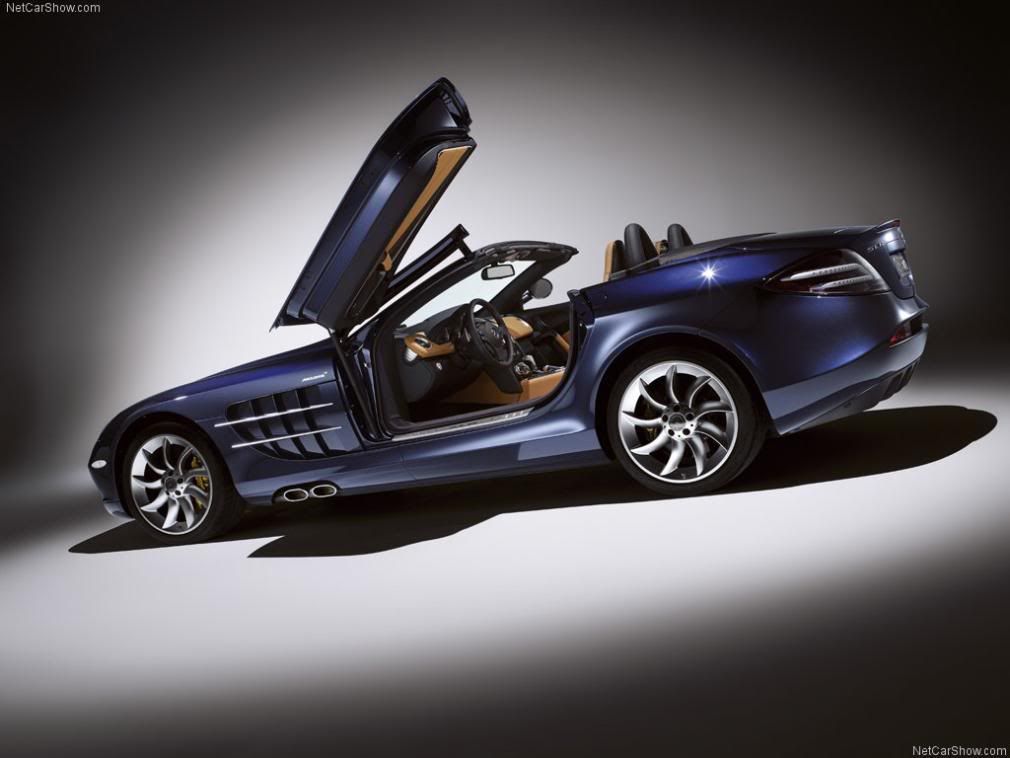
Mercedes-Benz SLR McLaren Roadster 722 S 2009


The new Mercedes-Benz SLR McLaren Roadster 722 S opens up astonishing dimensions when it comes to open-top driving. Delivering 478 kW/650 hp, acceleration from 0 to 100 km/h in 3.7 seconds and a maximum speed of 335 km/h, this two-seater cabriolet surpasses the existing benchmark among open-top super sports cars - the Mercedes-Benz SLR McLaren Roadster. Both vehicles feature a fully retractable folding soft top capable of withstanding the high speed and are made of carbon fibre. This endows both models with a very high degree of safety and extreme torsional stiffness. In addition to increased power, the new Mercedes-Benz SLR McLaren Roadster 722 S features even more dynamic suspension tuning and improved aerodynamics. While enjoying exceptional performance, the new roadster's occupants in no way lose out in terms of comfort or the vehicle's suitability for everyday use. With its sporty, premium-quality interior appointments and distinctive motorsport pedigree, the new Mercedes-Benz SLR McLaren Roadster 722 S is limited to 150 vehicles and will inspire the most discerning automotive enthusiasts.
Spectacular dimensions in open-top driving are opened up by the new Mercedes-Benz SLR McLaren Roadster 722 S. With an output of 478 kW/650 hp, acceleration from 0 to 100 km/h in 3.7 seconds and a top speed of 335 km/h, this open two-seater betters the standard set for open-air super-sports cars by the SLR McLaren Roadster. Both have a fully recessible soft top suitable for high speed driving, and are made from carbon fibre. This produces a very high level of safety and extremely high torsional strength. In addition to a higher engine output, the new Mercedes-Benz SLR McLaren Roadster 722 S has an even more dynamic suspension setup and further aerodynamic improvements.
By naming this new model variant the SLR Roadster 722 S, Mercedes-Benz is recalling the historic victory won at the classic Mille Miglia long-distance race in 1955 by British motor-racing legend Stirling Moss and his co-driver Dennis Jenkinson, in a Mercedes-Benz 300 SLR with the starting number 722. The Mercedes-Benz SLR McLaren Roadster 722 S continues the legend of the successful 1950s SLR racing sports cars, with innovative technology adopted from the world of motorsport.
Engine hand-built by AMG
The powerful heart of the Mercedes-Benz SLR McLaren Roadster 722 S is a supercharged 5.5-litre V8 engine which is hand-built in the Mercedes-AMG engine shop in Affalterbach. The special strengths of this high-performance engine include extraordinary responsiveness to movements of the accelerator, a high torque and an unmistakable V8 sound. Moreover, with an output of 478 kW/650 hp and 820 Nm of torque, power is on tap almost to excess (SLR McLaren Roadster: 460 kW/626 hp, 780 Nm). Accordingly the new model variant meets the wishes of the most discerning customers for even more sportiness combined with excellent day-to-day practicality.
The five-speed automatic transmission developed by Mercedes-Benz is designed for high performance. It is specially configured for a very high torque, and allows the driver to choose between two sets of shift characteristics. As a result the roadster achieves performance figures that are even outstanding for the high-end sports car segment: the Mercedes-Benz SLR McLaren Roadster 722 S absolves a sprint from zero to 100 km/h in a breathtaking 3.7 seconds, and 200 km/h is reached in 10.6 seconds. The maximum speed is 335 km/h, which is unrivalled by any other series-production roadster.
Even more dynamic suspension setup
The spring and shock absorber configurations of the suspension are stiffer, and the body has been lowered by 10 millimetres at the front and rear. This ensures the greater handling stability of the Mercedes-Benz SLR McLaren Roadster 722 S, with a significant improvement in handling dynamics. The lightweight, 19-inch forged aluminium wheels allow a view of the red-painted brake callipers on the highly-resistant carbon-fibre/ceramic brake discs, which make for impressive deceleration figures.
Sophisticated aerodynamics and a fabric soft top suited to high-speed driving
The outstanding qualities of the Mercedes-Benz SLR McLaren Roadster 722 S are complemented by the fully recessible fabric soft top, which blends harmoniously into the flowing lines of the roadster. The weave structure of this high-tech roof material reflects the carbon-fibre look, guarantees full day-to-day suitability in any weather conditions and allows the vehicle a top speed of 335 km/h - a unusual figure for a roadster. Thanks to favourable aeroacoustics, conversation during open-air journeys is still possible at well over 200 km/h.
The soft top opens and closes semi-automatically in around ten seconds, combining comfort expectations with the purist nature of the roadster. For opening, the roof needs to be unlatched at the windscreen frame and lifted slightly, after which it folds down electrically. The front section of the soft top features an integral aluminium cap, which effectively prevents "ballooning" at high speeds.
The handling and aerodynamics of this high-end roadster were optimised for high speeds in the wind tunnel. The aerodynamic concept follows that of the Mercedes-Benz SLR McLaren Coupe, with an airbrake integrated into the boot lid, an enclosed underbody and a diffusor in the rear bumper to ensure the greatest possible downforce on the rear axle. The so-called airsplitter at the front end augments this downforce, while small wheel spoilers reduce turbulence at the rear axle. The result is precise handling and steering at high speeds.
Outstanding performance and safety thanks to carbon fibre technology
In technical terms the Mercedes-Benz SLR McLaren Roadster 722 S benefits from the long experience of Mercedes-Benz and its Formula-1 partner McLaren. With the exception of two aluminium frames, the body is completely of carbon-fibre materials (CFRP). This makes it highly exceptional among high-performance sports cars. Especially for the roadster, the sophisticated carbon-fibre technology was developed further for the monocoque. The result is low weight, exemplary energy absorption and therefore a high level of occupant safety, plus a torsional rigidity that is unprecedented for an open-top car. It allows outstanding handling characteristics that are otherwise only found in closed super-sports cars.
A high level of safety is provided by unique carbon-fibre crash structures, steel-reinforced A-pillars and two fixed rollover bars. Other safety features include adaptive airbags, knee and sidebags, belt tensioners and a tyre pressure monitoring system.
A thoroughly sporty appearance
The roadster has a crystal antimony grey paint finish, which highlights the sculptured look of this high-performance car particularly effectively. The carbon-fibre technology is visually complemented by the black, grid-like air vents on the bonnet and the front and rear light modules with palladium grey surrounds.
In the interior, outstanding lateral support is guaranteed by sports bucket seats upholstered in a combination of semi-aniline leather/Alcantara. Striking visual highlights are provided by the contrasting seams in Mercedes-Benz 300 SL red, the embossed 722 S lettering on the head restraints and the likewise red seat belts. Frequently used controls such as the shift and parking brake levers are lined in particularly high-grip and moisture-absorbing suede leather. In the interior too, the generous use of carbon-fibre underlines the high-performance philosophy and adds a particularly puristic touch.
Exclusive appointments
The exclusive appointments include two-zone automatic climate control, a high-quality BOSE Premium sound system, a multifunction sports steering wheel with shift paddles and a navigation system with an integrated radio and CD player.
This limited edition of 150 examples is predominantly hand-built at the Formula 1 workshops of McLaren in Woking, England, and is available from January 1, 2009.
Subscribe to:
Posts (Atom)